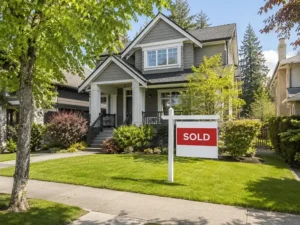


Estimating your Burnaby home sale proceeds before you list is one of the most useful steps you can take. Your sale price is only the starting point. By the time the mortgage is paid out, fees are covered, and adjustments are made, the amount that actually lands in your account can be noticeably lower than many sellers expect.
Knowing your likely net proceeds helps you plan your next purchase, set a realistic budget, and avoid surprises on completion day. Here is how to build a reliable estimate, step by step.
Step One: Start With a Realistic Sale Price
Everything else in your calculation depends on this number, so it needs to be grounded in today’s market. The most reliable estimate comes from recent comparable sales: similar homes in your neighbourhood, of a similar size, age, and condition, that have sold recently.
Avoid basing your estimate on your property assessment, a neighbour’s asking price, or what homes sold for at the market’s peak. Assessments are prepared for property tax purposes using a fixed valuation date, and asking prices are not sale prices. A free home valuation for your Burnaby home gives you a starting point based on current comparables.
It also helps to think in ranges. Estimate a likely sale price and a more conservative one. If your plans still work at the conservative figure, you are in a strong position.
Step Two: Subtract Your Mortgage Payout

For most sellers, the largest deduction is the remaining mortgage balance. Request a payout statement from your lender, which will show the exact amount needed to discharge the mortgage on a specific date, including accrued interest.
Don’t Forget Prepayment Penalties
If you are breaking your mortgage before the end of its term, your lender may charge a prepayment penalty. For many fixed-rate mortgages, this is calculated as the greater of three months’ interest or an interest rate differential, which can be substantial. Variable-rate mortgages often carry a penalty of around three months’ interest, but terms vary by lender, so check your mortgage documents and ask your lender for a written estimate.
If you are buying another home, ask whether your mortgage can be ported to the new property. Porting may reduce or eliminate the penalty, depending on your lender’s terms and your new purchase.
Secured Lines of Credit and Other Charges
If you have a home equity line of credit or any other loan registered against your property, it will typically need to be paid out at completion as well. Review your title for any registered charges so nothing comes as a surprise.
Step Three: Account for Real Estate Commission
Real estate commission is usually one of the largest selling costs. In British Columbia, commission is negotiated between you and your brokerage and set out in your listing agreement. It may be a percentage of the sale price, a tiered structure, or another arrangement, and GST applies on top.
Make sure you understand exactly how commission will be calculated before you sign. The BC Financial Services Authority’s consumer guide to remuneration explains how real estate professionals are paid and what they must disclose to you.
Step Four: Include Legal Fees and Closing Costs
You will need a lawyer or notary to handle the conveyancing side of your sale, including discharging your mortgage and transferring funds. Their fee will typically include disbursements such as title searches and registration costs.
If you are selling a strata property, there may also be fees for strata documents. The buyer will typically need a Form B information certificate, and the strata may charge for documents requested during the sale.
Step Five: Understand Adjustments on Completion
On completion, your lawyer or notary prepares a statement of adjustments that divides certain ongoing costs between you and the buyer based on the completion date.
Property taxes are the most common example. If you have already paid the full year’s property taxes, you will typically receive a credit for the portion of the year after completion. If you have not yet paid them, the amount owing will be adjusted the other way. Strata fees, utility charges, and any prepaid services may be adjusted in a similar way.
Any special levies approved by your strata before the sale may also affect your proceeds, depending on what your contract of purchase and sale says about who is responsible for them.
Step Six: Budget for Preparation and Moving Costs
Many sellers spend money before listing the home. Painting, minor repairs, cleaning, decluttering, staging, and storage can all make a meaningful difference to how the home shows and sells. Our guide on getting the most out of your home sale in Burnaby covers which improvements are worth the investment.
Don’t forget the cost of moving, including movers, temporary storage, and any overlap in housing costs if your sale and purchase don’t line up perfectly.
Step Seven: Consider Taxes on the Sale
For many homeowners, the sale of a principal residence is not taxable thanks to the principal residence exemption. However, you are still generally required to report the sale on your tax return. The Canada Revenue Agency’s principal residence guidance explains how the exemption works and what you need to report.
The situation is different if the property was a rental, an investment, or was not your principal residence for every year you owned it. Capital gains tax may apply, and properties held for a short time may be subject to federal flipping rules and the BC home flipping tax. Sellers who are not residents of Canada also face additional requirements. If any of these situations apply to you, speak with an accountant before you list so you can build the tax impact into your estimate.
Putting Your Estimate Together
Once you have each piece, your estimate is straightforward: start with your expected sale price, then subtract your mortgage payout and any penalty, commission and GST, legal fees, other secured debts, preparation and moving costs, and any taxes owing. Adjust for property tax and strata credits or charges.
Run the calculation twice, once at your likely sale price and once at your conservative figure. The difference shows how much flexibility you have, which is especially important if you are buying another home at the same time.
Plan Your Sale With Confidence
A clear estimate of your Burnaby home sale proceeds turns an uncertain number into a practical plan. It helps you decide when to list, how much to spend on your next home, and how much breathing room you have along the way.
If you would like help building a realistic estimate, explore our selling services in Burnaby or reach out to Yinon for a personalized review of your home’s value and what you can expect to walk away with.