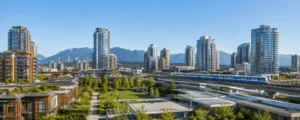


The Vancouver real estate market is showing early signs of renewed activity, but buyers still have more choice and negotiating room than they did during stronger seller-controlled markets. Metro Vancouver home sales increased in June 2026, while prices remained relatively stable from the previous month. For buyers considering a condo near Metrotown, a townhouse in Burnaby or a detached home in East Vancouver, understanding these conditions can help prevent rushed decisions and costly mistakes. Our team analyzes current listings, recent sales and neighbourhood-level demand to help buyers recognize genuine value. Contact Yinon Filler Real Estate for personalized guidance through the Vancouver housing market.
Before You Start: What Vancouver Buyers Must Know
The Vancouver real estate market is not moving at the same pace across every property type or neighbourhood. In June 2026, Metro Vancouver recorded 2,390 residential sales, representing a 9.6% increase from June 2025. However, sales were still 12.4% below the region’s 10-year seasonal average. This means demand is recovering, but buyers are not yet facing the widespread competition normally associated with an aggressive seller’s market.
The composite benchmark price for a Metro Vancouver residential property was approximately $1,099,100 in June 2026. That figure was 6% lower than in June 2025 and only 0.1% lower than in May 2026, suggesting that prices have recently remained relatively steady despite the year-over-year decline.
💡 Pro Tip: Do not rely on the Metro Vancouver benchmark price alone. A condo near Brentwood Town Centre may follow a very different pricing pattern from a detached home in Burnaby Heights or a townhouse in East Vancouver.
Buyers should also understand that the advertised asking price does not automatically represent the property’s market value. Some sellers price close to their expected sale price, while others list aggressively to attract multiple offers. We compare each property with recent neighbourhood sales, current competition and the condition of the home before recommending an offer strategy.
Buyers who want to understand the experience and local approach behind this analysis can learn more about Yinon Filler and his knowledge of the Burnaby and Vancouver real estate markets.
The Step-by-Step Process for Buying in the Current Market
Buying successfully in Vancouver requires more than searching listings and attending open houses. Buyers need to understand their financing, identify neighbourhood-level trends and examine the risks attached to each property before submitting an offer. In a market with more available inventory, preparation can give buyers the confidence to negotiate without losing a genuinely strong opportunity.
Confirm Your Buying Budget: Speak with a qualified mortgage professional and obtain a current pre-approval before viewing homes seriously.
Define Your Priority Areas: Compare neighbourhoods based on price, commuting time, property type, schools, future development and long-term resale potential.
Review Recent Comparable Sales: Study properties sold during the previous 30 to 90 days rather than relying only on active listing prices.
Explore Available Homes: Review current Vancouver and Burnaby properties to better understand pricing, property types and available inventory.
Evaluate the Property Carefully: Review the condition, age, renovations, strata records, maintenance history and possible future expenses.
Determine the Seller’s Position: Consider how long the property has been listed, whether the price has changed and whether the seller has already received offers.
Prepare a Strategic Offer: Work with your realtor to balance price, deposit, dates, conditions and the likelihood of competing buyers.
Complete Your Due Diligence: Arrange inspections, financing approval, legal review and document verification before removing conditions.
⚠️ Warning: A slower market does not mean every seller will accept a heavily discounted offer. Well-priced homes in desirable locations can still attract significant attention and sell quickly.
What Current Vancouver Market Numbers Mean for Buyers
Metro Vancouver had 17,017 properties listed for sale in June 2026, approximately 30.2% above the 10-year seasonal average. The overall sales-to-active listings ratio was 14.6%, with detached homes at 12%, townhouses at 17.8% and apartments at 15.5%. These figures indicate relatively balanced conditions, although detached homes were closer to the range where sellers may face downward pricing pressure.
The benchmark price for a detached home was $1,842,900, while the townhouse benchmark was $1,046,200 and the apartment benchmark was $695,200. All three categories were priced lower than they were one year earlier, although monthly changes remained modest.
For buyers, this combination of improving sales and elevated inventory creates an important window. There may be opportunities to negotiate today, but that advantage could weaken if demand continues to rise while fewer new listings enter the market.
✅ Did You Know? Greater Vancouver REALTORS® generally associates sustained ratios below 12% with downward price pressure and sustained ratios above 20% with upward pressure. The June 2026 market was between those thresholds overall.
The 4 Mistakes That Cost Vancouver Buyers the Most
The most expensive buyer mistakes often come from treating every property and neighbourhood as though they follow the same market trend. Vancouver is highly localized, and two homes with similar square footage may have very different values because of location, building quality, future construction, transit access or lot potential.
Waiting for the Perfect Market Bottom: Buyers may miss the right property while attempting to predict the lowest possible price. Market bottoms are usually clear only after prices begin rising again.
Focusing Only on the Purchase Price: Strata fees, insurance, maintenance, property transfer tax and upcoming building repairs can significantly change the true cost of ownership.
Skipping Document Review: Condo and townhouse buyers who do not examine depreciation reports, meeting minutes and financial statements may inherit major special assessments.
Using One Strategy Everywhere: An offer that works for an older condo in South Vancouver may not work for a renovated home near Commercial Drive or a townhouse close to Metrotown.
🏆 Insider Insight: A property that appears more expensive may offer better long-term value if it has a stronger location, healthier strata finances and fewer immediate repair requirements.
How Interest Rates Affect Vancouver Home Buyers
Financing conditions remain one of the most important factors shaping buyer demand. On July 15, 2026, the Bank of Canada maintained its target overnight rate at 2.25%. The rate had remained at that level through the first seven months of 2026, giving buyers greater short-term certainty about monetary policy, although mortgage rates still vary by lender, term and borrower profile.
A lower mortgage rate can increase a buyer’s purchasing power, but it should not be treated as permission to spend the maximum amount approved by a lender. Buyers must consider monthly payments, property taxes, strata fees, insurance and future maintenance.
It is also important to test the budget against possible renewal rates. A home should remain manageable even if borrowing costs change later. Through our professional real estate services, we help buyers compare property options based on total ownership costs rather than focusing only on the mortgage amount.
Costs and Exemptions Buyers Should Review
Beyond the down payment and mortgage, Vancouver buyers should budget for legal fees, inspections, moving costs, insurance and property transfer tax. First-time buyers who meet the provincial eligibility requirements may qualify for a full or partial property transfer tax exemption.
For qualifying homes valued at $500,000 or less, eligible first-time buyers may receive a full exemption. Properties valued above $500,000 and up to $835,000 may qualify for an $8,000 exemption, while the benefit is gradually reduced for properties priced between $835,000 and $860,000.
Qualifying newly built principal residences may also receive a full property transfer tax exemption when the fair market value is no more than $1.1 million. A partial exemption may apply up to $1.15 million.
Eligibility depends on the buyer, property and registration details. Buyers should confirm the current rules with a lawyer, notary or qualified tax professional before relying on an exemption.
When to Stop Searching Alone and Call a Vancouver Realtor
Online listings are useful for initial research, but they do not always reveal whether a property is correctly priced, why a previous deal collapsed or what risks may be hidden in the documents. Professional representation becomes especially valuable when comparing several neighbourhoods, reviewing strata records or preparing an offer under time pressure.
A buyer considering properties around Brentwood, Metrotown, Capitol Hill or East Vancouver may see similar list prices but very different building histories and resale prospects. We evaluate recent local sales, active competition, property condition and seller motivation to build a strategy around the specific home.
| Feature | Yinon Filler, eXp Realty | Searching Without Representation |
| Market Analysis | ✅ Recent MLS sales and neighbourhood trends | ❌ Reliance on public listing prices |
| Property Evaluation | ✅ Condition, location and resale review | ❌ Limited property context |
| Offer Strategy | ✅ Terms based on competition and seller position | ❌ Price-based guesswork |
| Document Review | ✅ Guidance through strata and property records | ❌ Risk of missed warning signs |
| Negotiation | ✅ Professional communication and representation | ❌ Direct emotional decision-making |
Our experience across Vancouver and Burnaby allows us to identify differences that automated property estimates may overlook. Traffic patterns, future developments, school catchments, building management and even the side of the street can influence demand.
We combine market analysis with clear communication and a personalized buying strategy. Whether you are searching for a first condo, moving into a larger family home or purchasing an investment property, our goal is to help you understand both the opportunity and the risk before you commit.
Is Now a Good Time to Buy in Vancouver?
The current market may offer favourable conditions for financially prepared buyers who plan to hold their property for several years. Prices remain below their levels from June 2025, inventory is above the historical seasonal average and the recent increase in sales suggests demand may be starting to return.
However, there is no single answer that applies to every buyer. The right timing depends on your budget, employment stability, financing, desired neighbourhood and expected ownership period. Buyers who need to sell again within a short timeframe may face more risk than those purchasing a long-term residence.
BCREA’s second-quarter forecast projected that residential sales across British Columbia would decline by 2.1% in 2026 before increasing by 7.7% in 2027. Forecasts are not guarantees, but this outlook supports the importance of choosing a property based on personal readiness and long-term value rather than waiting for a dramatic market shift.
Managing a Vancouver home purchase is about more than finding an attractive listing. It requires careful research, financial preparation and a clear understanding of local conditions. Whether you are considering a condo near Downtown Vancouver, a townhouse in Burnaby or a detached home in North Vancouver, we are here to provide the market insight and negotiation strategy you need. Contact Yinon Filler to arrange a personalized Vancouver property search and buyer consultation.
Frequently Asked Questions
Are Vancouver home prices going down in 2026?
The Metro Vancouver composite benchmark price was approximately $1,099,100 in June 2026, which was 6% lower than in June 2025. However, it declined only 0.1% from May, indicating that recent prices were relatively stable. Conditions vary significantly by neighbourhood and property type.
Is Vancouver currently a buyer’s market?
The overall sales-to-active listings ratio was 14.6% in June 2026, which generally reflects balanced conditions rather than a strong buyer’s or seller’s market. Detached homes had a lower ratio of 12%, while townhouses and apartments showed somewhat stronger demand.
What type of Vancouver property is most affordable?
Apartments generally offer the lowest entry price among the major property categories. The Metro Vancouver apartment benchmark was $695,200 in June 2026, compared with $1,046,200 for townhouses and $1,842,900 for detached homes. Individual prices depend on the neighbourhood, age, size and condition.
Should I get mortgage pre-approval before viewing homes?
Yes. A current mortgage pre-approval helps establish your realistic purchasing range and allows you to respond more confidently when the right property becomes available. Buyers should also budget for closing costs, property transfer tax, insurance, inspections and monthly strata fees where applicable.
Can first-time buyers avoid property transfer tax in British Columbia?
Qualified first-time buyers may receive a full or partial exemption. The exemption depends on the property’s value, size, ownership percentage and the buyer’s eligibility. Different thresholds apply to resale and newly built homes, so buyers should verify the rules before completing a purchase.