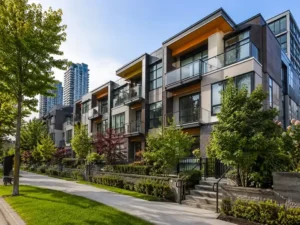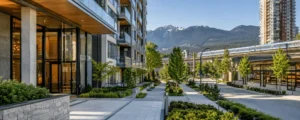
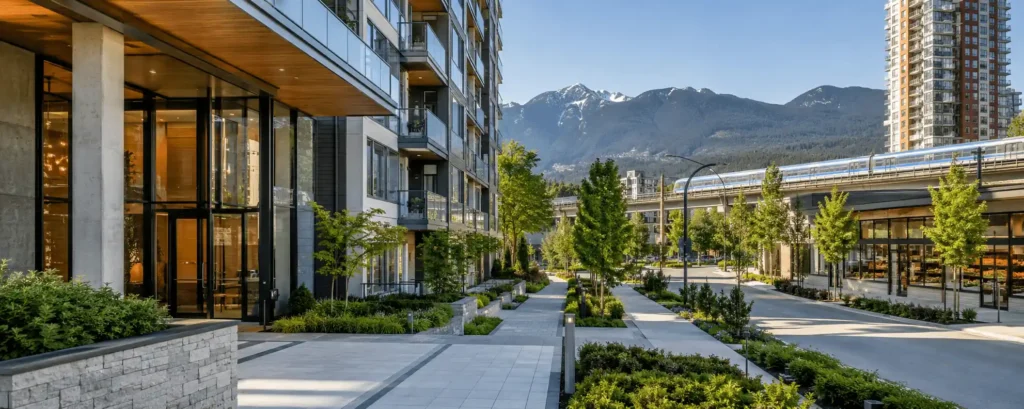

Burnaby has spent the last several years shifting away from its old reputation as a quiet suburb between Vancouver and the rest of the Lower Mainland. In 2026, that shift is showing up clearly in skylines, zoning policy, and the types of buyers who are choosing to put down roots here.
Several forces are shaping the city at once: provincial density rules aimed at transit hubs, major projects reaching completion in the town centres, and a housing market that is adjusting after a period of rapid price growth. Together, they are changing what it means to buy, sell, or invest in Burnaby right now.
Here is a look at the biggest trends shaping Burnaby real estate in 2026, and what they could mean for your next move.
The Four Town Centres Are Becoming the City’s New Core
Burnaby’s growth strategy has long centred on four Town Centres, Metrotown, Brentwood, Edmonds, and Lougheed, each built around a SkyTrain station. In 2026, that vision is visibly taking shape. Major projects like the Amazing Brentwood redevelopment continue to reshape the skyline, Metrotown’s vertical growth is turning it into a genuine downtown core, and the City of Lougheed master plan is transforming what was once a more industrial pocket of the city.
For buyers and investors, this means the town centres are increasingly where new supply, amenities, and transit access are concentrated, while more established, lower-density neighbourhoods continue to hold their own appeal for buyers who want more space and a quieter setting.
Provincial Transit-Oriented Development Rules Are Reshaping Zoning
British Columbia’s transit-oriented development legislation requires municipalities to allow higher density within a defined distance of frequent transit stations. Burnaby, given how many SkyTrain stations it already has, is one of the municipalities most affected by these rules.
The city has pushed back in places, at one point requesting an exemption around Brentwood over concerns about how much additional density an area can reasonably absorb, though the province ultimately did not grant that exemption. The result is a zoning environment that continues to favour taller, denser development near stations, which has implications for future supply, neighbourhood character, and long-term property values in those areas.
Buyers evaluating a property near a SkyTrain station may want to consider not just what exists today, but what is permitted to be built nearby in the years ahead.
A Market Adjusting After Years of Rapid Growth
After a long stretch of price appreciation across Metro Vancouver, 2026 has brought a more measured market. Benchmark prices across detached homes, townhouses, and condos have softened compared to a year earlier, and sales activity has remained below typical seasonal levels.
This does not mean Burnaby has become an inexpensive market. It means the pace of price growth has slowed and buyers currently have more room to negotiate than they did during the most competitive years. For a fuller picture of current pricing, a market snapshot offers more detail than general regional headlines.
Condos and Townhouses Continue to Gain Ground
As detached home prices remain out of reach for many buyers, condos and townhouses continue to make up a growing share of transactions in Burnaby. This is especially true near the four town centres, where new supply is concentrated and transit access is strongest.
Buyers priced out of a detached home in established neighbourhoods are increasingly considering different Burnaby neighbourhoods and property types than they might have looked at five years ago.
Investors Are Paying Closer Attention to Long-Term Zoning
With so much of Burnaby’s future development tied to town centre and transit-oriented zoning, investors are increasingly factoring rezoning potential into their decisions, not just current rental income or resale value. A property’s long-term upside can depend heavily on what is permitted to be built on or near it in the coming years.
This kind of analysis benefits from local, hands-on investment guidance rather than general market commentary, since zoning and redevelopment potential can vary block by block.
What This Means for Your Next Move
Whether you are buying a first home, selling a long-held property, or building an investment portfolio, Burnaby in 2026 rewards buyers and sellers who understand the specifics of their neighbourhood rather than relying on citywide assumptions. The town centres are evolving quickly, established neighbourhoods are holding steady in their own way, and pricing has shifted enough to change the calculus for many buyers.
If you want to talk through what these trends mean for your specific goals, reach out for a straightforward conversation about where Burnaby’s market stands today.
Frequently Asked Questions
Why is there so much construction happening in Burnaby right now?
Much of it is concentrated in Burnaby’s four Town Centres, Metrotown, Brentwood, Edmonds, and Lougheed, which have long been planned as high-density hubs around SkyTrain stations. Provincial transit-oriented development rules have added further pressure to increase density near transit.
Does transit-oriented development affect property values?
It can, in both directions. Increased density potential may raise long-term redevelopment value for some properties, while a wave of new nearby supply can affect pricing and competition for existing homes in the short term.
Is now a good time to buy in Burnaby given the slower market?
That depends on your goals and timeline. Softer pricing and lower sales activity have created more negotiating room for buyers, though every neighbourhood and property type is behaving somewhat differently.
Are condos a better investment than detached homes in Burnaby right now?
Each comes with different trade-offs around price point, rental demand, and long-term appreciation potential. The right choice depends on your budget, goals, and risk tolerance rather than a single citywide answer.
How can I find out if a property is affected by transit-oriented development zoning?
Proximity to SkyTrain stations is the main factor, but exact zoning rules vary by parcel and area. Reviewing current municipal zoning alongside local market knowledge gives the clearest picture for a specific property.